Chancel
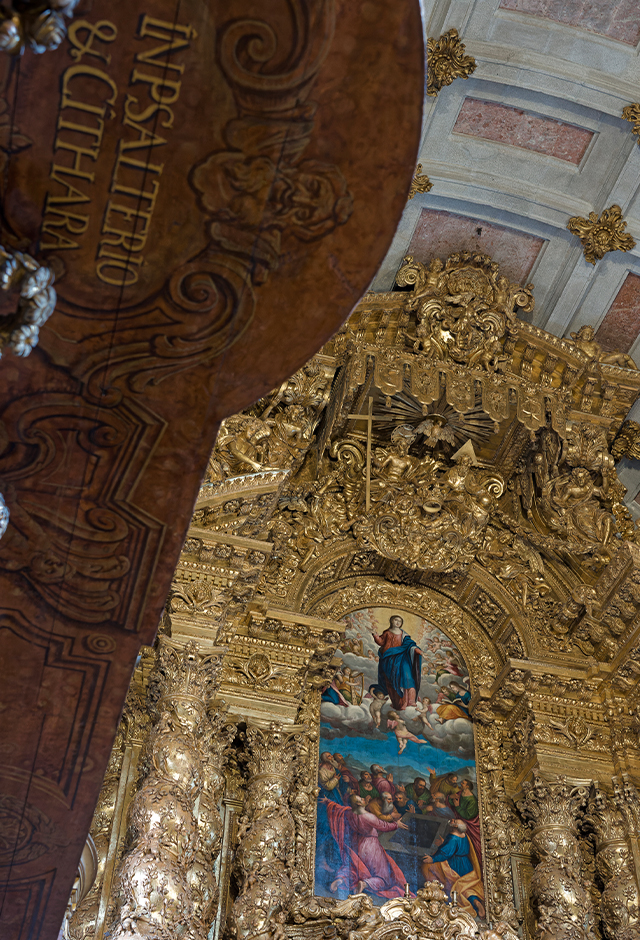
The current chancel was built between 1606 and 1610 at the behest of Bishop Gonçalo de Morais (1602-1617). The Romanesque chevet, built in the 12th century, disappeared to make way for this work. The current chapel of Saint Peter is part of one of the apses of this structure that was lost. The new construction sought to give grandeur and light to the most important element of the Catholic Liturgy, the stage for the Sacrament of the Eucharist.
The memory of Bishop Gonçalo de Morais remains in the tombstone that was placed in the centre of the chancel, aligned with the circular access opening to the funerary crypt built in the same period.
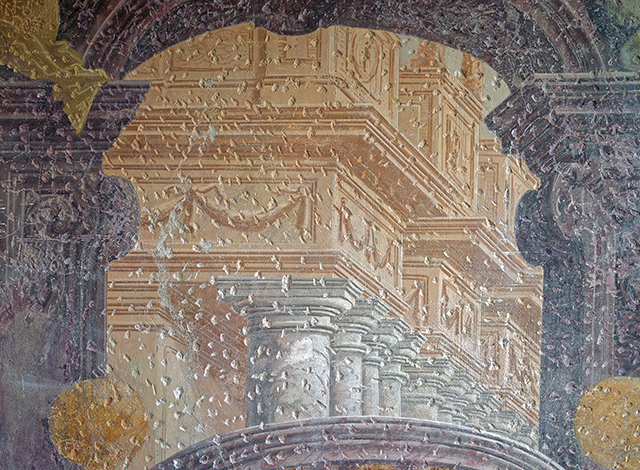
The interior of the chancel was extensively remodelled in the 1720s. The large windows and two doors date from this period. The vault and walls were covered with decorative frescoes by the Italian painter Nicolau Nasoni (1691-1773).
The design of the main altarpiece and the four sculptures (Saint Benedict, Saint Basil, Saint John Nepomucene and Saint Bernard) were made by the French sculptor Claude Laprade. The carver of the imposing altarpiece was Miguel Francisco da Silva from Lisbon.
The Baroque altarpiece, choir stalls, organs, railings, pelmets and capitals were made and gilded between 1726 and 1731.
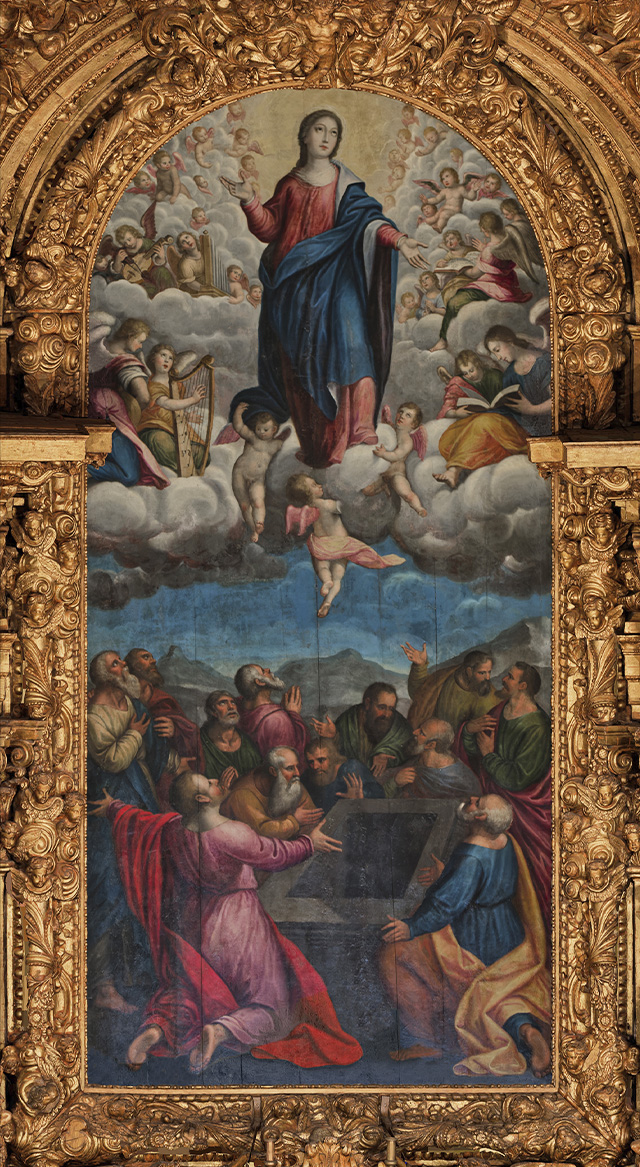
The altarpiece's grandiose painting dates to the early 17th century and is by the Mannerist painter Simão Rodrigues. The piece was reused from the previous altarpiece and depicts the cathedral's patron saint, Our Lady of the Assumption, who ascends to Heaven aided by a multitude of angels. The feat is witnessed by the Apostles who, on the ground, observe the scene in ecstasy.

The bronze railings, designed to protect the church's main chapel, date from 1754. The current balconies, in neoclassical style, were built at the end of the 18th century and replaced the previous baroque ones.