Chapel of Saint Vincent
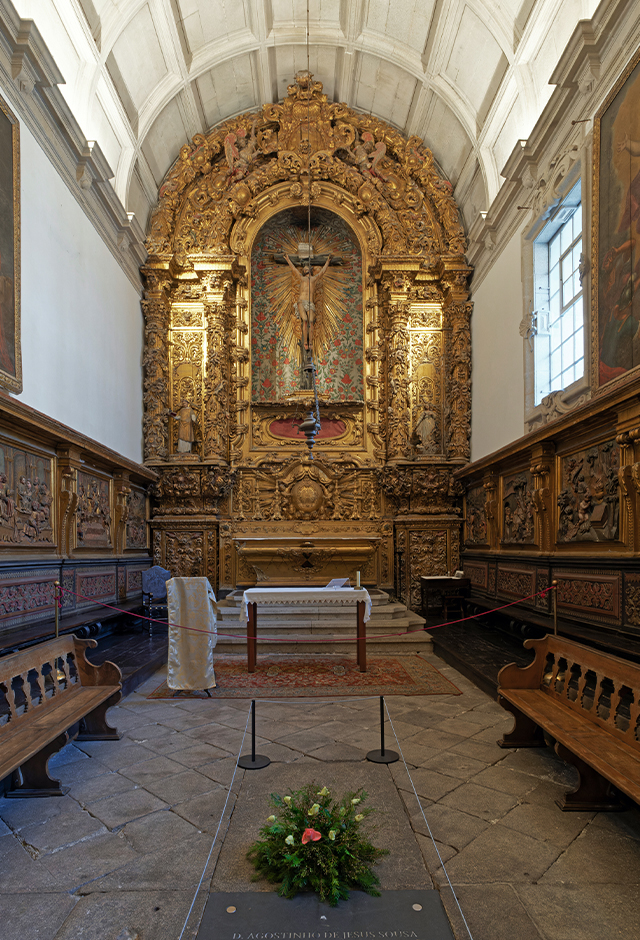
Also known as Our Lady of Health and later Lord of the Agony, the chapel of Saint Vincent was built by Bishop Marcos de Lisboa (B. 1581-1591), who chose it as his burial place. Bishop Gonçalo de Morais (B. 1602-1617) converted it into the pantheon of the bishops of Porto, a role it still fulfils today.
The choir stalls, dating from the 17th century, may have belonged to the chancel, but was replaced by the one now there, made between 1726-1727. The reliefs depict episodes from the Old and New Testaments.
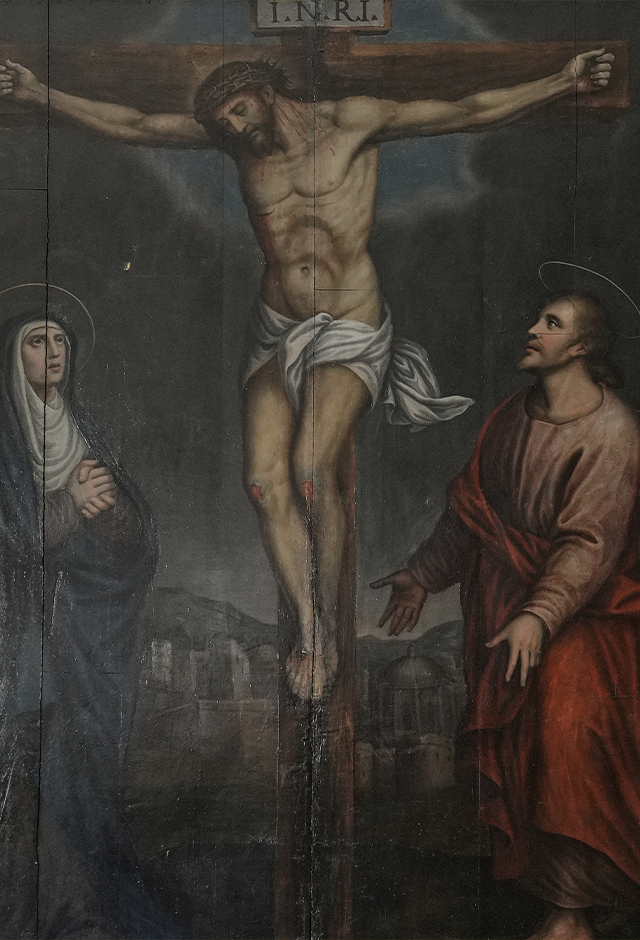
The two painted panels can be ascribed to the Mannerist painter Simão Rodrigues (c. 1560-1629) and would have belonged to the 17th century altarpiece in the chancel.
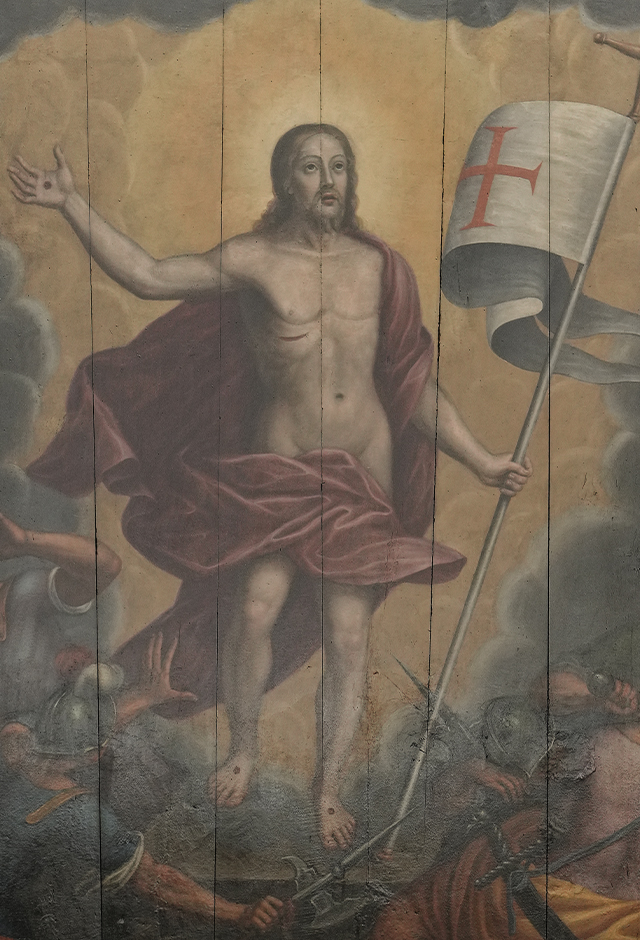
One of the panel shown the Calvary, an image of Christ on the Cross flanked by the Sorrowful Mother and by St John the Evangelist, the ‘beloved disciple’. The other the “Resurrection of Jesus” the innocent martyr who triumphs over death and brings new light to the world.
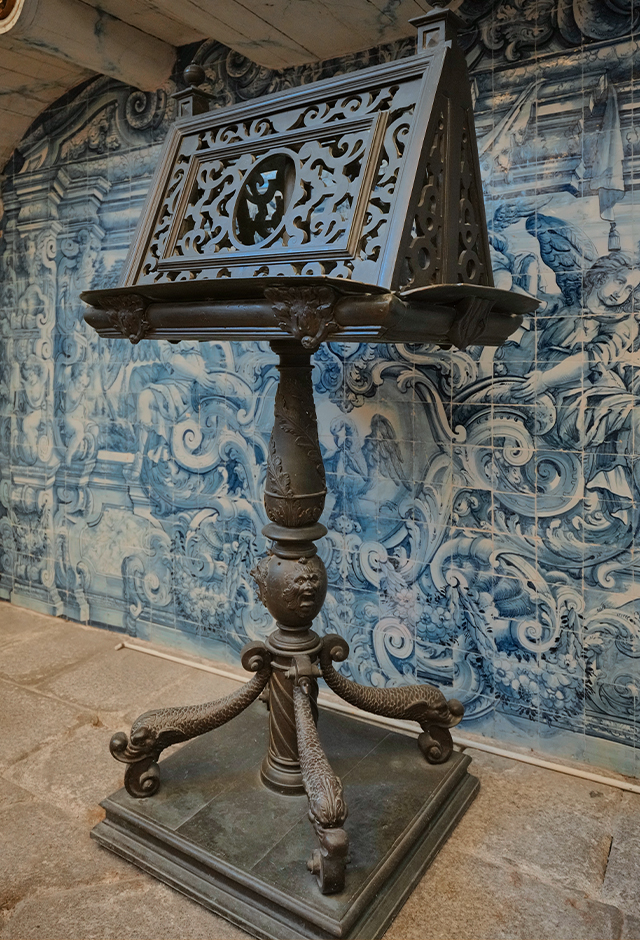
The choir stalls, made of bronze and of Italian origin, were given to the cathedral by Bishop Gonçalo de Morais (B. 1602-1617), as evidenced by his coat-of-arms on one side, which has since disappeared.
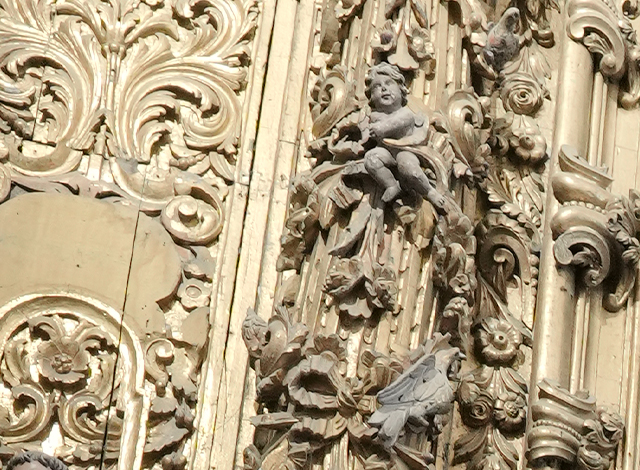
The altarpiece, in gilded wood carving, dates from the 1720s. The decoration is made up of grapevines and bunches of grapes (symbolising the Eucharist), small birds and ‘children’ alluding to Paradise, the Resurrection and Salvation. This symbolism is in keeping with the image of Christ Crucified displayed inside the rostrum.
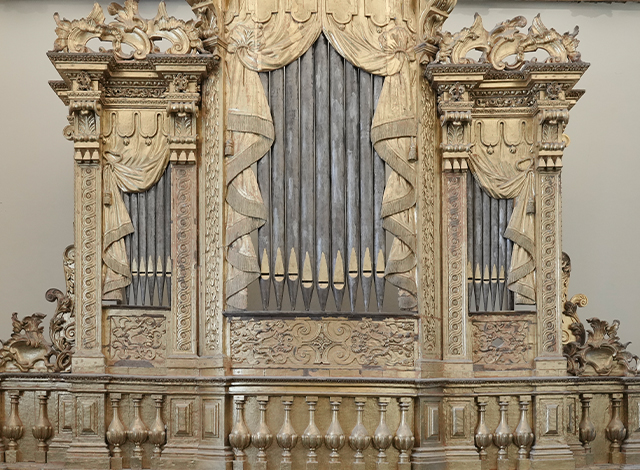
The organ, ascribed to Father Lourenço da Conceição, was built in the 1720s. It was initially at pavement level, but was raised after the bandstand was built, resting on an arch and granite frame. The entire artistic arrangement, in gilded woodwork, dates from around 1730.
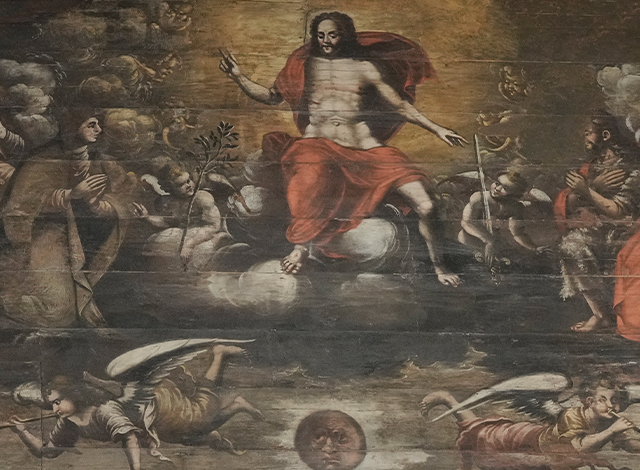
The painting above it probably dates from the same chronology, but its author is unknown. It depicts the Last Judgement, a theme inspired by the Book of Revelation, and which reminds Christians of the fate of souls on the day of Christ's Second Coming. The theme thus fits in with the chapel's funerary function.