The Body of the Church

The image we see today of the body of the church, an austere space devoid of any elements, is the result of a 20th century restoration. The three naves separated by thick pillars do indeed date back to the medieval period, but everything else has disappeared: the plastering of the walls, the altars that first surrounded the pillars and then the side walls of the naves, the chapels, tombs and funerary monuments, pulpits and different arrangements of the high choir.
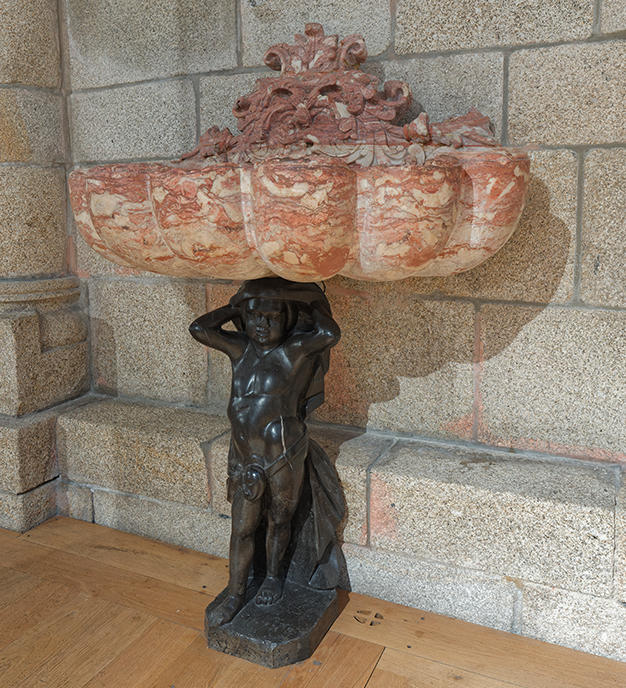
From the great Baroque work (1717-1741), the four holy water basins (c. 1720) remain, made up of shells executed in Encarnadão (generally red-coloured limestone) supported by atlantes carved in black stone.
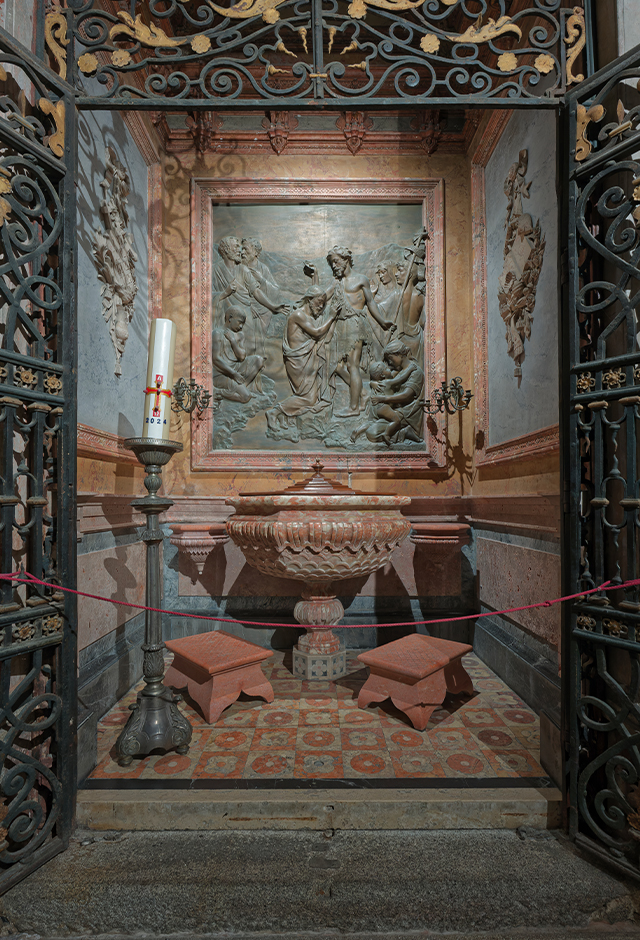
The baptismal chapel brings together two periods of artistic intervention: one Baroque (iron railings, paving, stonework covering the first third of the walls, font) and the other 19th century (bronze reliefs and decorative stucco on part of the walls and roof). The bronze sculpture is by Teixeira Lopes, the Father (1837-1918), a renowned Portuguese sculptor and ceramist, and represents the ‘Baptism of Christ’, a theme alluding to the function of the space.
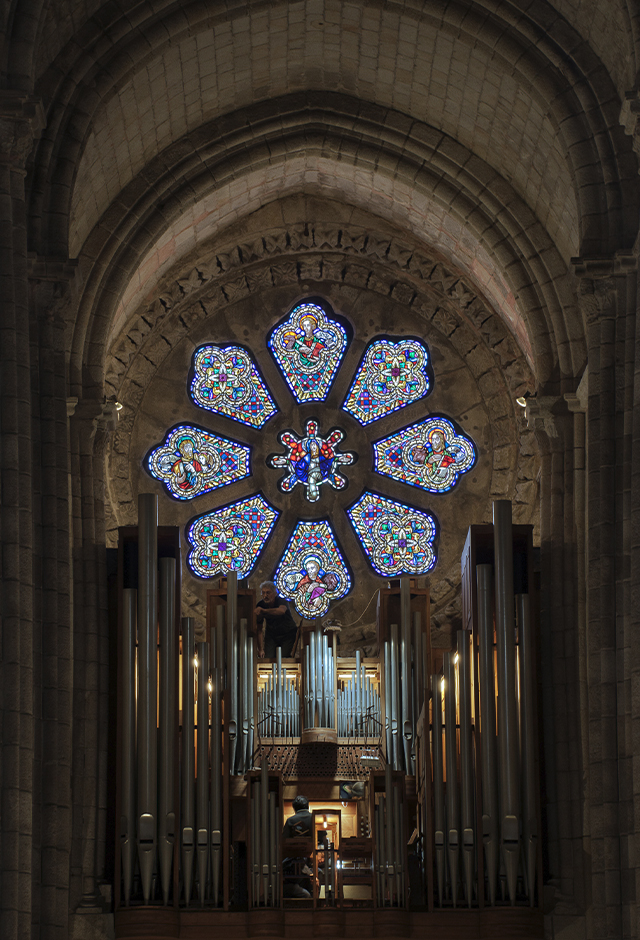
The choir's Great Organ was built between 1983 and 1985 by the German firm Georg Jann Orgelbau Meisterbetrieb. After the success of this work (inaugurated on 19 October 1985), the renowned organ builder Georg Jann settled in Portugal and set up an organ building workshop on the outskirts of Porto. In 2006 he moved to Brazil, where he died on 12 February 2019.