Sacristy
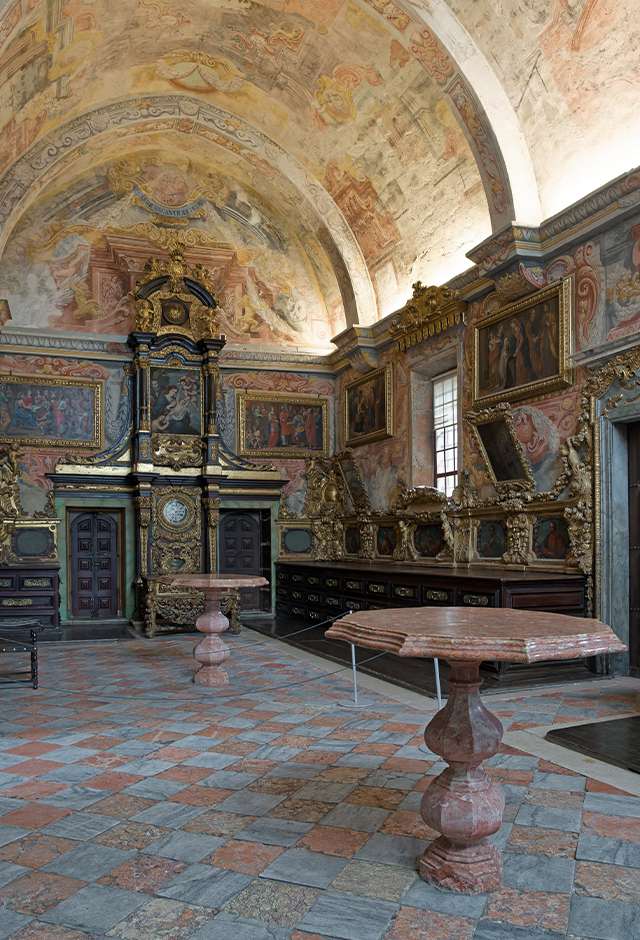
The construction of the sacristy dates to the first quarter of the 14th century, having been greatly transformed in the early 17th century at the behest of Bishop Gonçalo de Morais (B. 1602-1617). At the beginning of the 18th century (1700-1701) it was enlarged by the master masons António da Costa and António da Costa, ‘the new one’, son of the former, and again remodelled in 1859, as can be seen on the top north wall: SEDE VACANTE AN 1859.
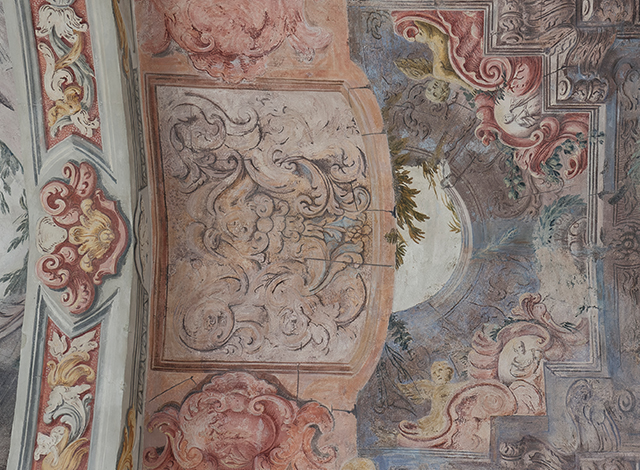
In 1731, the space was badly affected by a fire, which forced it to be completely remodelled in 1734. The vault's decorative paintings, of an illusionist nature, are by Nicolau Nasoni, who also designed the blackwood altarpiece. This was executed by Miguel Francisco da Silva and gilded by Manuel Pinto Monteiro. The oil painting on canvas depicts the theme of ‘Rest in the Flight to Egypt’, with Our Lady ready to breastfeed the Child. Saint John the Baptist holds his cousin's right foot, which is turned towards the Cross, symbolising the sacrifice destined for him.
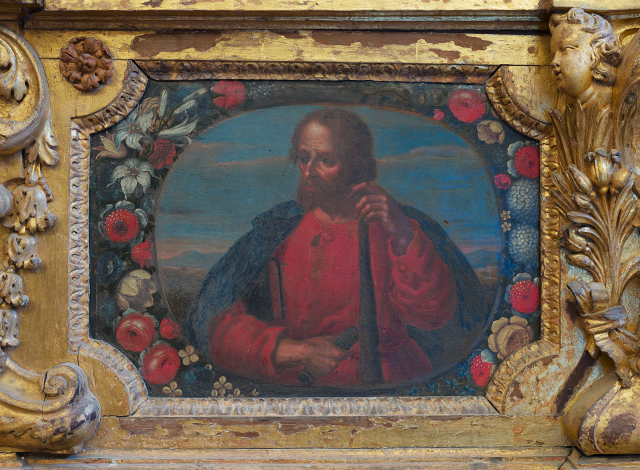
The backrests depict paintings of the Twelve Apostles: Saint Peter, Saint Andrew, Saint James the Greater, Saint Thomas, Saint John, Saint Matthew, Saint James the Lesser, Saint Philip, Saint Jude Thaddeus, Saint Bartholomew, Saint Simon and Saint Matthias, the ‘posthumous’ apostle who took the place of Judas Iscariot, the traitor. The figures of Saint Paul, the Apostle to the Gentiles, and Saint Stephen, the first martyr of Jesus' followers, are also part of the group.
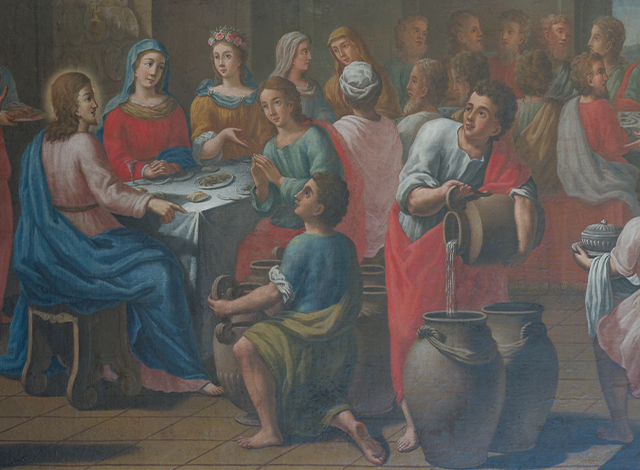
The eight tablets and two canvases (painted in 1734 by the Italian Carlos Antonio Leoni), set in gilded wood mouldings, depict episodes from the Life and Childhood of Jesus: the Marriage of the Virgin, the Annunciation, the Visitation, the Adoration of the Magi, the Circumcision, the Adoration of the Shepherds, the Presentation of the Child in the Temple, the Return from the Flight into Egypt, the Child Jesus in the Temple among the Doctors and the Wedding at Cana.