Transept
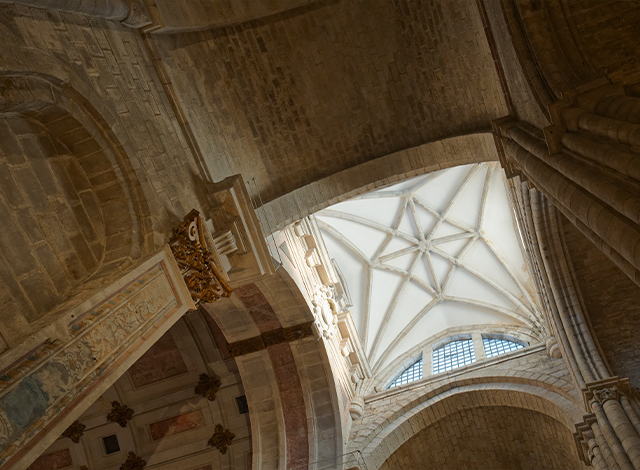
The transept is a space built perpendicular to the naves and which gives the church's plan the symbolic shape of the Cross of Christ.The point where the vertical and horizontal axes intersect is called the transept, which is covered by a lantern tower that favours the lighting of the naves and main chapel. Covered by a ribbed dome, the tower was erected between 1556 and 1557 by order of bishop Rodrigo Pinheiro (1552-1557). The large windows, however, date from 1724.
With medieval roots, the shape of the transept has remained stable over time. The changes occurred above all in terms of the devotions and their respective reception spaces, which underwent various transformations over the centuries.
Altar of Our Lady of the Crib
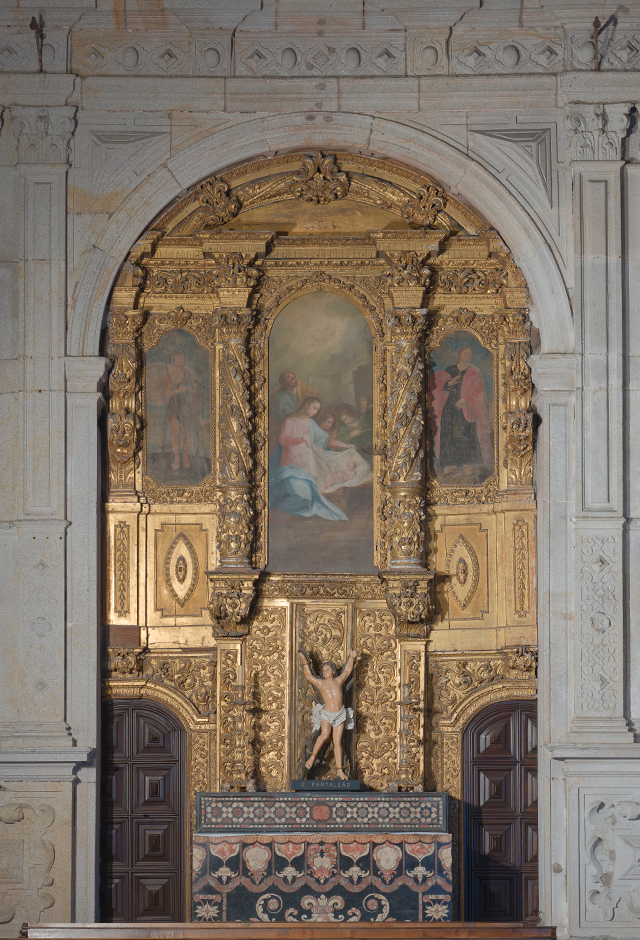
The invocation of this chapel dates to the 16th century, having replaced that of Saint John the Baptist. It had its own structure, which was demolished in the 20th century. The altarpiece was built in the 1720s, although the current arrangement is the responsibility of last century's restorations.
The altar table and stool, made of stone inlays, were made between 1719 and 1723, like those in the chapel opposite, dedicated to Saint Anne. The meticulous multicoloured stonework imitates the arrangement of the fabric models.
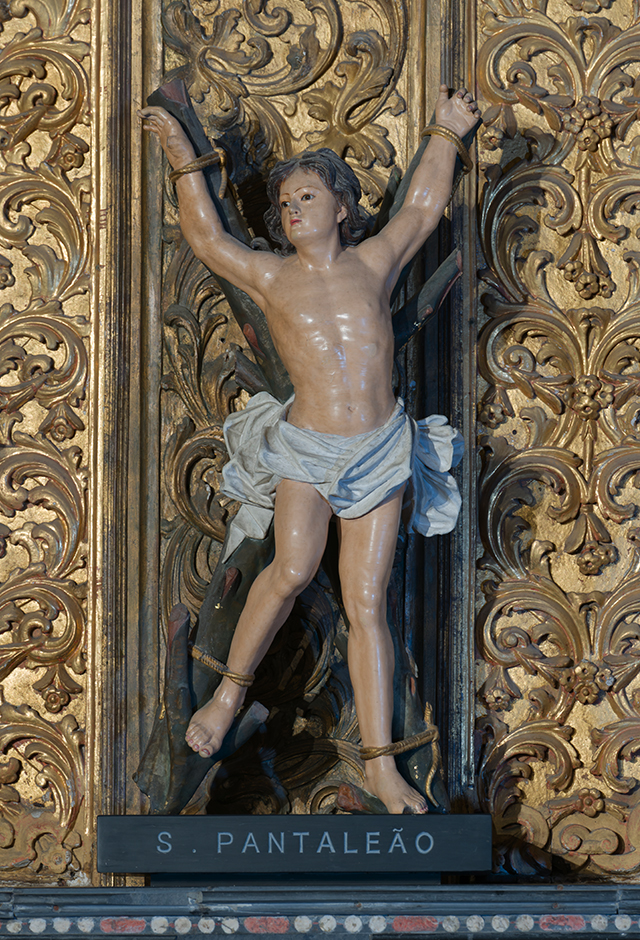
Saint Pantaleon of Nicomedia was one of the most revered saints in Porto and was the city's patron saint until the 20th century. According to legend, his body was brought by a group of Armenian Christians in 1453, after the Turks took Constantinople. The arrival of the relics in Miragaia stopped an outbreak of the plague, a prodigy that turned this saint into a protector against this scourge. The sculpture dates from the 18th century.
Chapel of the Blessed Sacrament
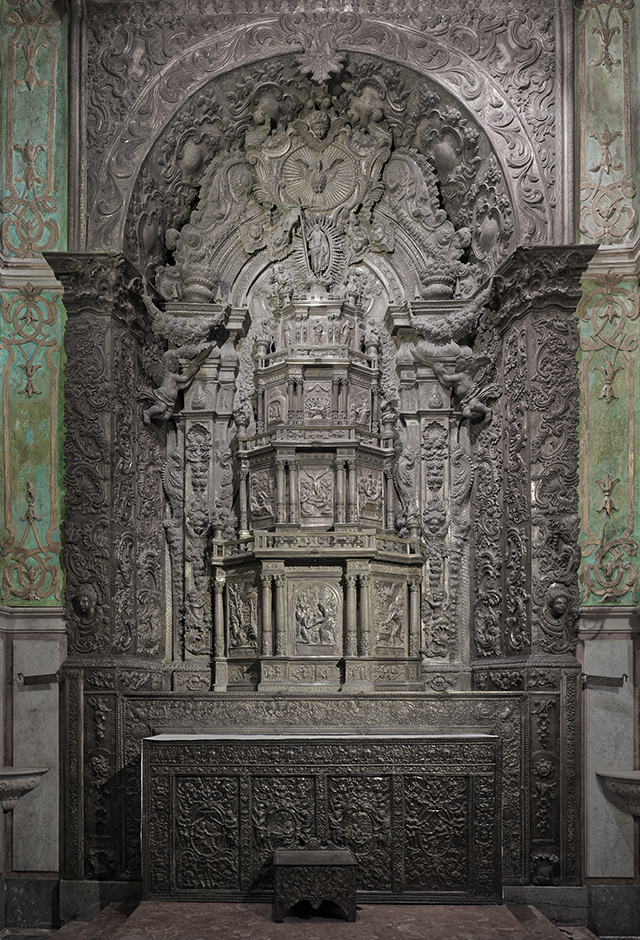
The existence of a chapel dedicated to the Blessed Sacrament or Body of God dates to the 13th century. In the 16th century, it was located where it is today. In the following centuries it underwent various transformations, justified by the fervour surrounding this cult, which was seen as a symbol of the Catholic Church's unity and charity. The current configuration, centred on the ground and surrounded on three sides by a semicircle, resulted from the 1707-1708 campaign.
In the 1630s, the Confraternity of the Blessed Sacrament (proven to have existed since the end of the previous century) had the emblematic silver altar made. The sumptuous ensemble that has come down to us, however, is the result of a phased process that began in the 17th century (pyramidal tabernacle [1632-1651], frontal [1676-1678] and stool [1679-1682]) and continued in the following centuries.
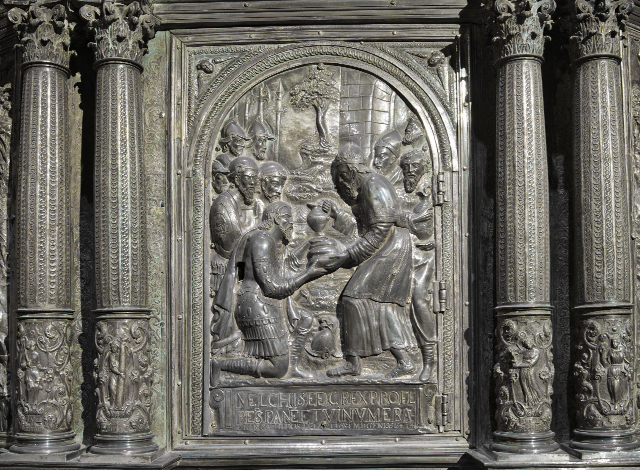
The body of the tabernacle displays Eucharistic and allegorical iconography, bringing together themes from the Old and New Testaments. The programme establishes the relationship between the Sacrifice of Christ, repeated in the Eucharist and evident in the Body of the Lord preserved in the tabernacle, and the affirmation of the Resurrection, visible in the triumphant image of the Saviour that completes the whole.
The iron railings that enclose the chapel date from 1881, having replaced earlier ones from the 16th century.
Chapel of Our Lady of Vandoma
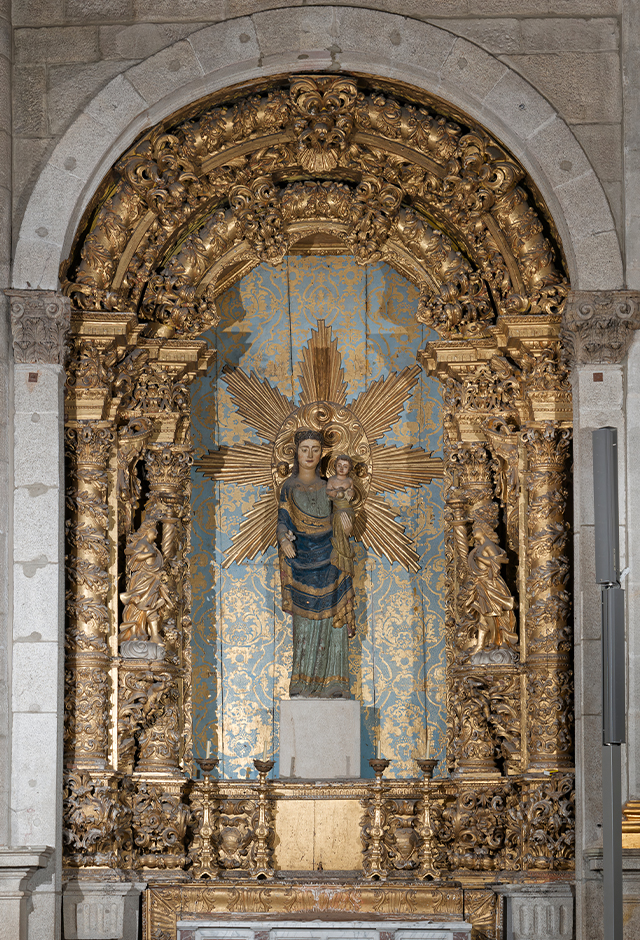
The construction of this chapel and its gilded altarpiece dates to 1719-1721. The work was intended to receive the miraculous image of the Lord of the Beyond, of deep-rooted local cult. The current invocation dates to 1968, when the Crucifix of the Lord of the Beyond and the sculpture of Our Lady of Sorrows were removed to make way for the image of Our Lady of Vandoma, the new patron saint of the city of Porto.
According to legend, an image of the Virgin was brought from France in the 10th century by a group of knights who arrived here to fight the Muslims. However, the current limestone sculpture dates from the 15th century.
Chapel of Our Lady of the Bramble
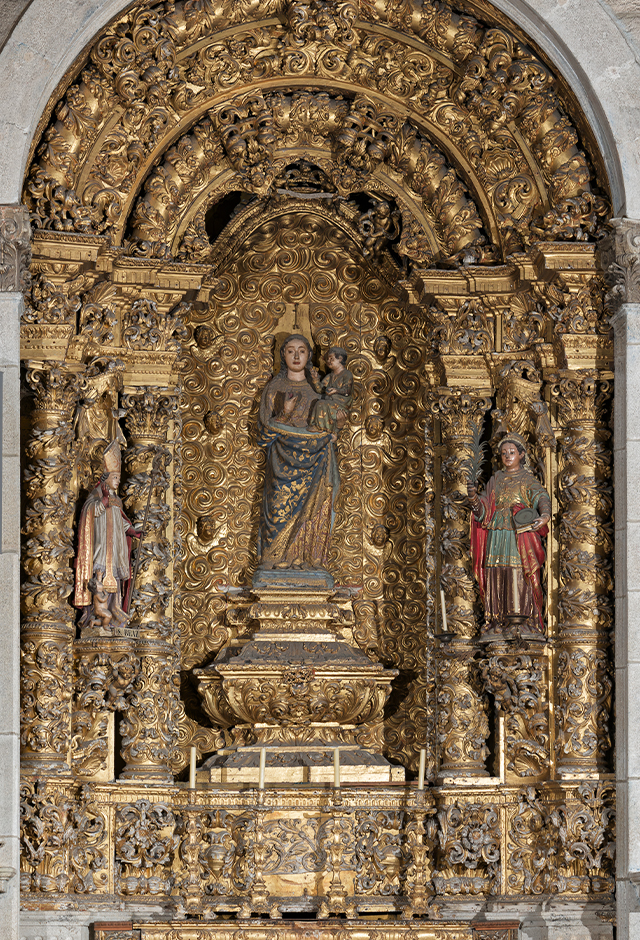
The chapel was opened between 1719-1721 to receive one of the cathedral's most devout images: Our Lady of the Bramble. The gilded altarpiece dates from the same period. Until then, there was an altar of this invocation on the second pillar of the body of the church (on the right as you enter), in charge of the blacksmiths' brotherhood.
According to legend, the sculpture was found in a bramble during the construction of the church. For this reason, tradition attributes to her the function of guiding souls to heaven, keeping brambles out of the way. From early on, she was recognised as a miraculous image, to whom the faithful ascribed countless wonders. Ex-votos are still offered at the Virgin's altar.
The current image probably dates from the 15th century, but the workmanship of the garments that cover it dates from the 17th century. It represents a Virgin of Tenderness, the affectionate Mother who cradles her Son in her arms.
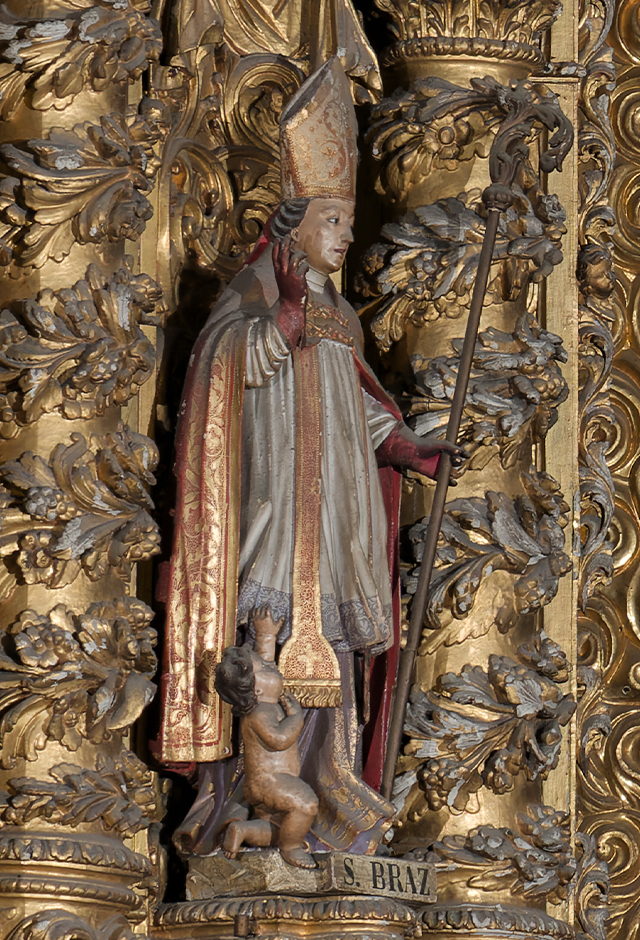
Saint Bras - Martyred in 316, he is one of the most revered saints in Christianity, a healer to whom legend ascribed countless miracles. In the image, he is dressed as a bishop, presenting at his feet the miracle of the child he saved from a fish bone stuck in his throat. For this reason, he is invoked to cure all diseases of the throat.
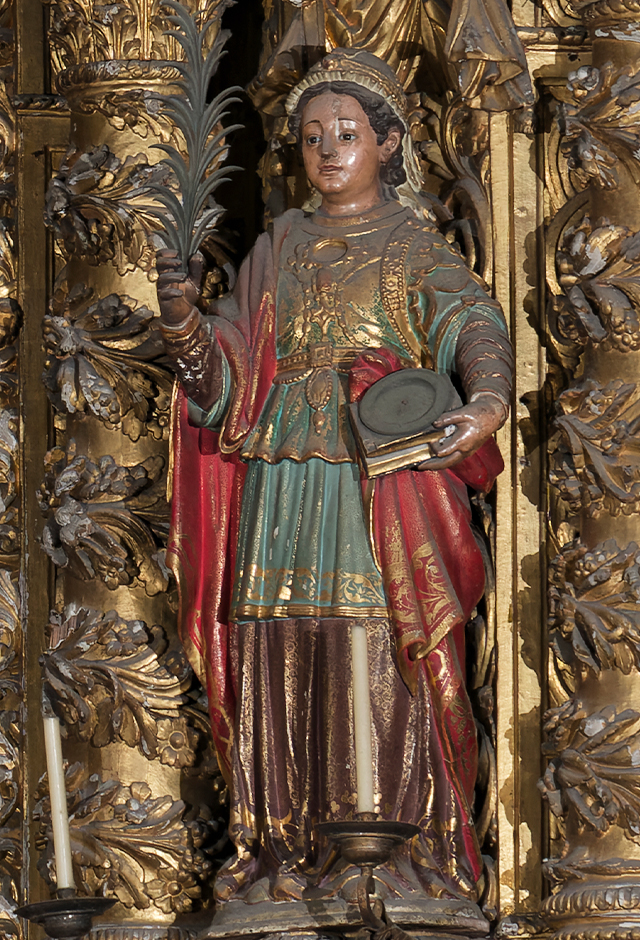
Saint Lucy of Syracuse - 4th century martyr who has been the object of great devotion to this day. In her right hand she holds the palm of martyrdom, symbolising her faith in Christ and her triumph over death. In her right hand she holds a book, alluding to her wisdom, and a plate with a pair of eyes, referring to a hypothetical martyrdom. The name Lucy means ‘the luminous one’, which explains her protection of sight and cure of eye diseases. Later legends also claim that the virgin martyr's eyes were gouged out.
Chapel of Saint Peter
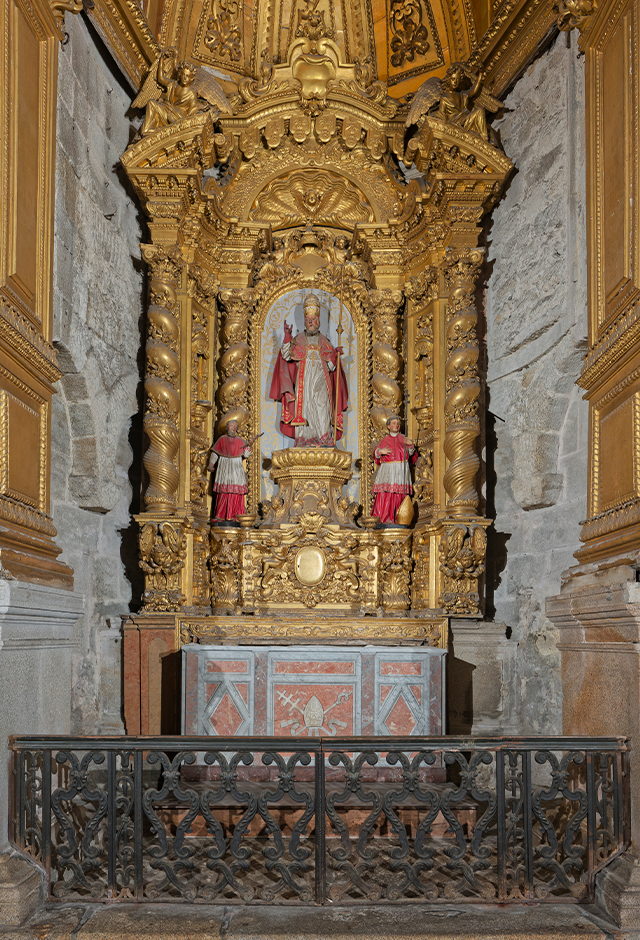
The earliest reference to a chapel of Saint Peter dates to the 13th century. Its location persisted over time and corresponded to one of the Romanesque apses of the medieval headland, as can be seen by the arches integrated into the walls.
The current front, in gilded wood carving, was built in the 1720s. The monumentality of the work was intended to harmonise with the portico of the chapel of the Blessed Sacrament, located on the opposite side of the transept. The gilded woodwork of the altarpiece and roof probably dates from the 1720s-1730s.
The image of Saint Peter, the chapel's patron saint, occupies the centre of the altar. The Apostle Peter (from the Latin Petrus - stone), symbolically associated with the first stone of Christ's Church, is a unique figure in Christianity. Named Simon and a fisherman by trade, he was one of the Twelve chosen by Jesus and the first to recognise him as the awaited Messiah. In this sculpture he is depicted as Pope, wearing the garb of pontiffs. In his left hand he holds two keys (the power to open and close), his main attribute, and in his right hand he holds the triple cross, the insignia of papal dignity.

Saint Jerome (c. 347-420) - One of the Doctors of the Latin Church, responsible for translating the Vulgate (the Bible) into Latin. In the picture he is wearing cardinal's robes, as he was Pope Damasus’ secretary. In his right hand he holds a stone (with which he self-flagellated on his chest), symbolising his penance in the desert, and in his right hand he holds a crucifix, representing his faith in Christ.
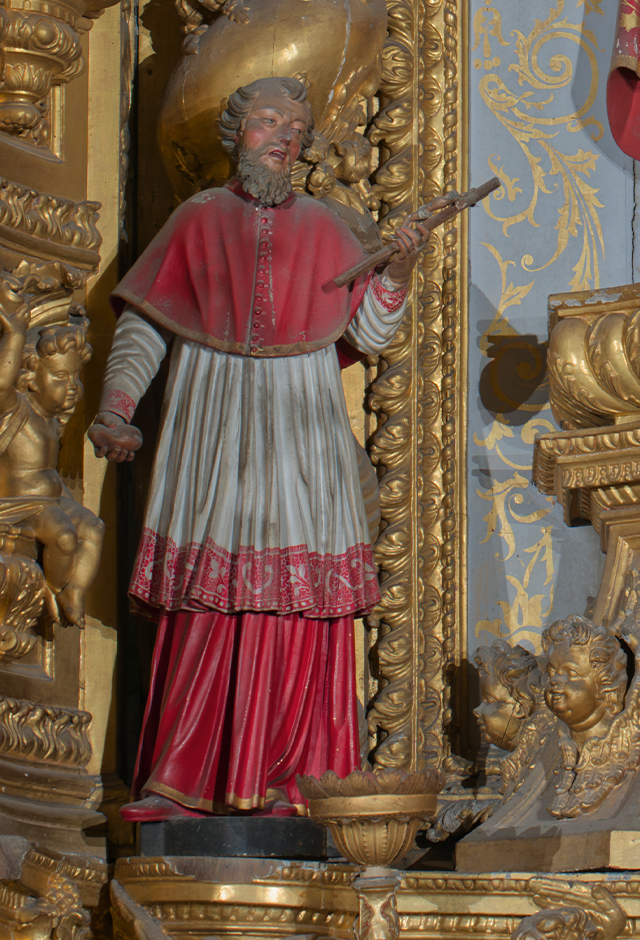
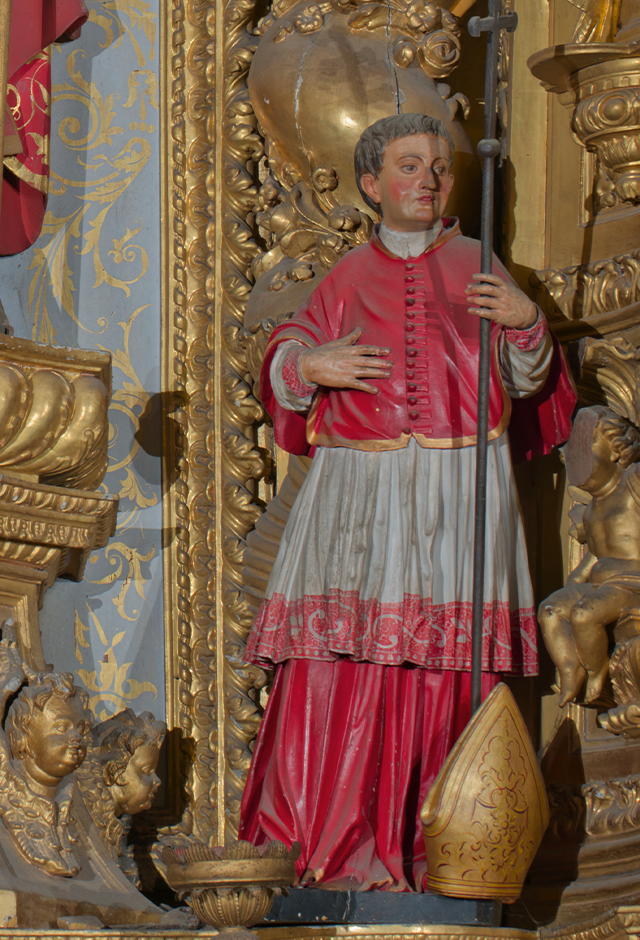
Saint Charles Borromeo (1538-1584) - Personifies the ideals of the Catholic Reformation and was canonised in 1612 by Pope Paul V. Archbishop of Milan, he was praised as a model for prelates, which explains his presence on this altar. He wears cardinal's robes, a patriarchal cross in his left hand (double-armed) and a mitre at his feet, as a sign of his humility.
Chapel of Saint Anne
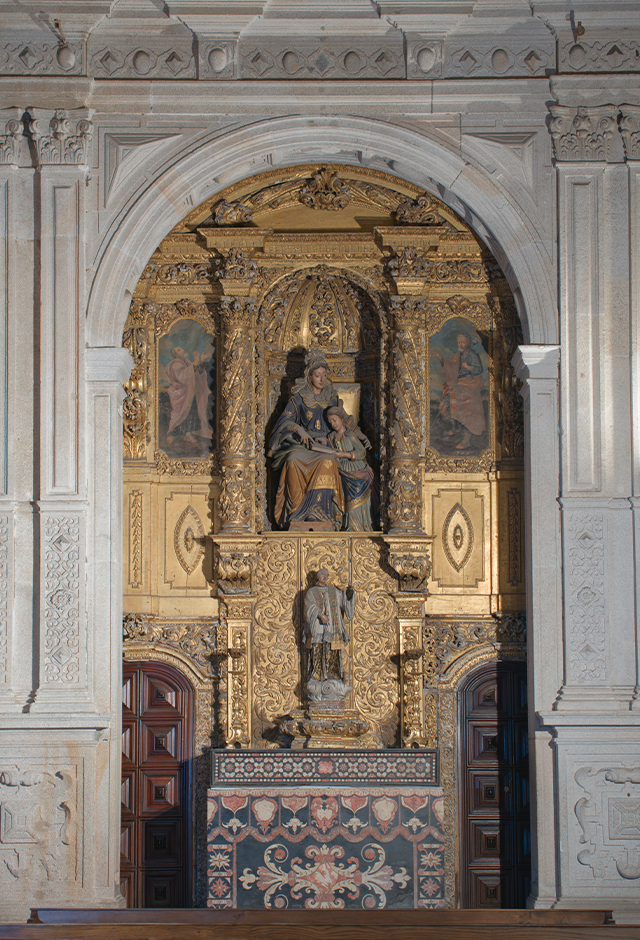
The altar was rebuilt in the 1720s, but the image of Saint Anne Teaching the Virgin to Read, dates to the 17th century. Mother of the Virgin Mary and a model wife, she was the object of great devotion since the Middle Ages, being the protector of mothers in labour and newborn babies. With Saint Joachim, her husband, painted on the left side of the altar, she is the patron saint of grandparents.
The altarpiece emphasises family values, an interpretation reinforced by the painting of Saint Joseph on the right and the sculpture of the ‘Return from the Flight into Egypt’: the baby Jesus walks accompanied by Mary and Joseph, his adoptive father.